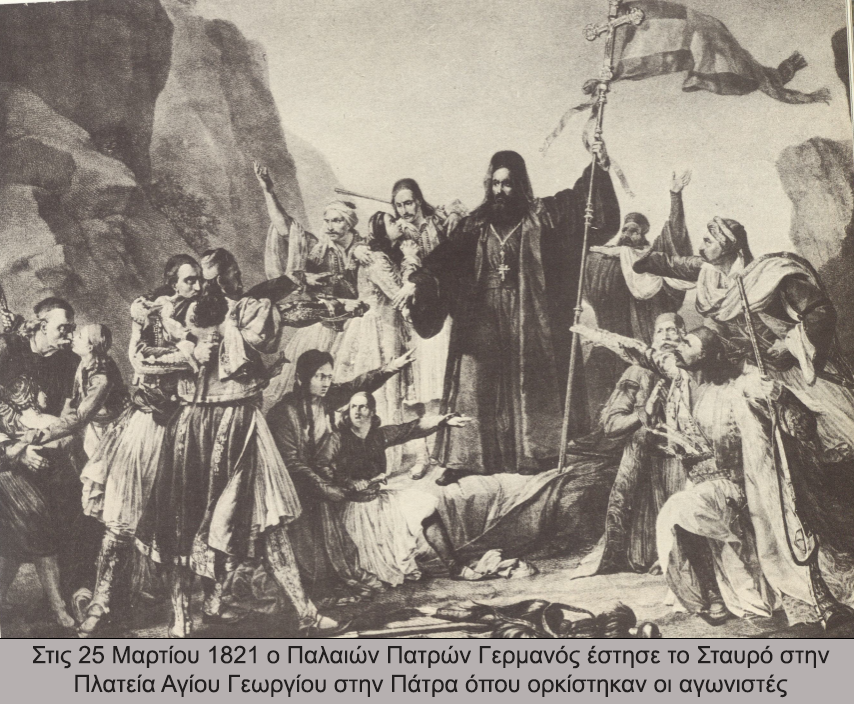
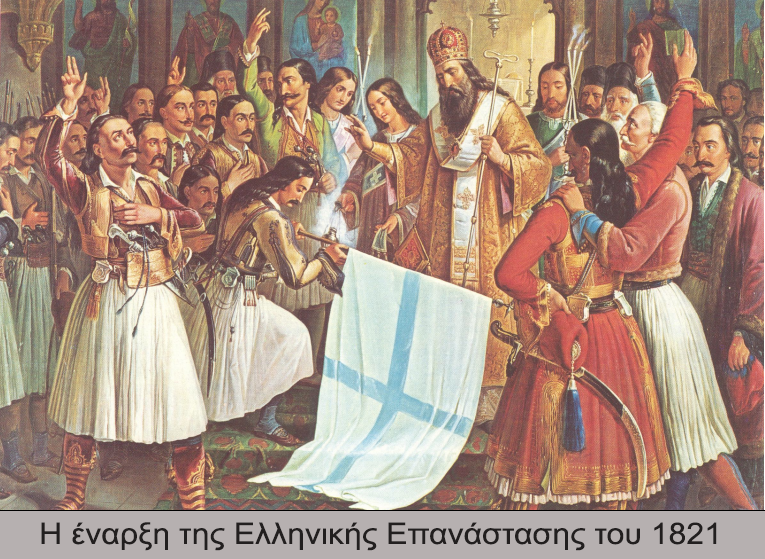
The Greek War of Independence did not break out on the same day or everywhere at the same time, although the 25th of March had been decided as the day of general revolt.
Messengers claiming to speak on behalf of a Great Power spread the message of revolt across the country. In the Peloponnese, Archimandrite Dikeos, also known as “Papaflessas”, arrived in late 1820, sent by Ypsilantis. He claimed that Russian forces were coming to liberate Greece. Moreover, Alexandros Ypsilantis sent his younger brother, Dimitrios, to represent him in Greece.
Elements that helped the revolt were the expansion of the Filiki Eteria, the fact that it included numerous devoted and daring members, and the patriotic fervour and strong revolutionary beliefs of the people in the cities and the countryside. Another important element that helped at the start of the Revolution was the small number of Turkish military forces in the Peloponnese. Large Turkish military forces had been sent to Epirus to fight Ali Pasha.
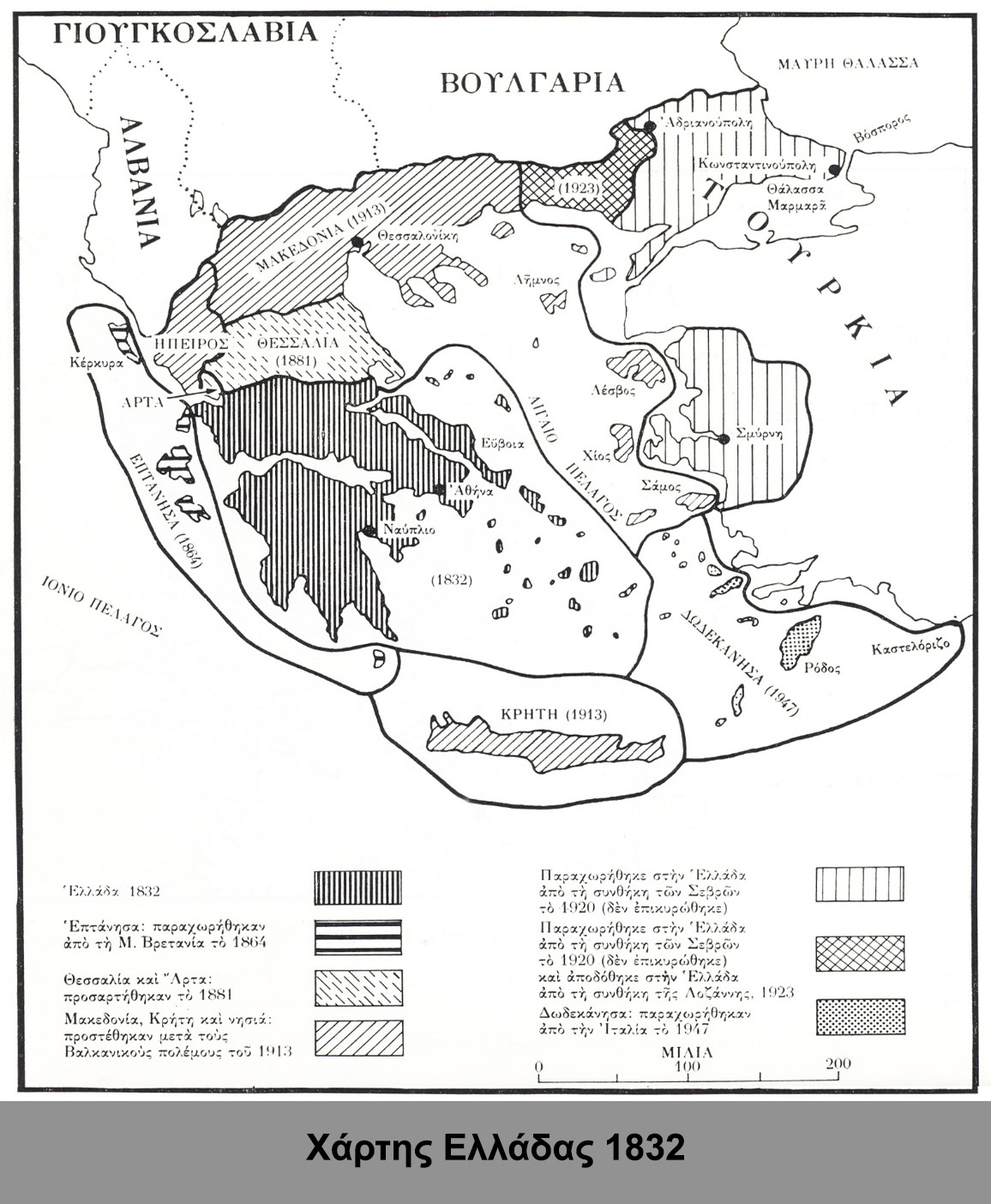
The glorious Greek War of Independence of 1821 was the greatest effort by the Greeks to gain their freedom. Despite the difficulties and problems, both internal and external, in the end, the Revolution fully achieved its goals. Within a relatively short period, by 1830, Greece gained its independence, even with limited borders. Free life as a nation could now begin and national goals could be set.
#ΕλληνικόςΣτρατός, #HellenicArmy