The authoritarian policy of Prince George as high commissioner of Crete caused much discontent, resulting in the emergence of an opposition faction led by Eleftherios Venizelos, which demanded the amendment of the Constitution of the Cretan State.
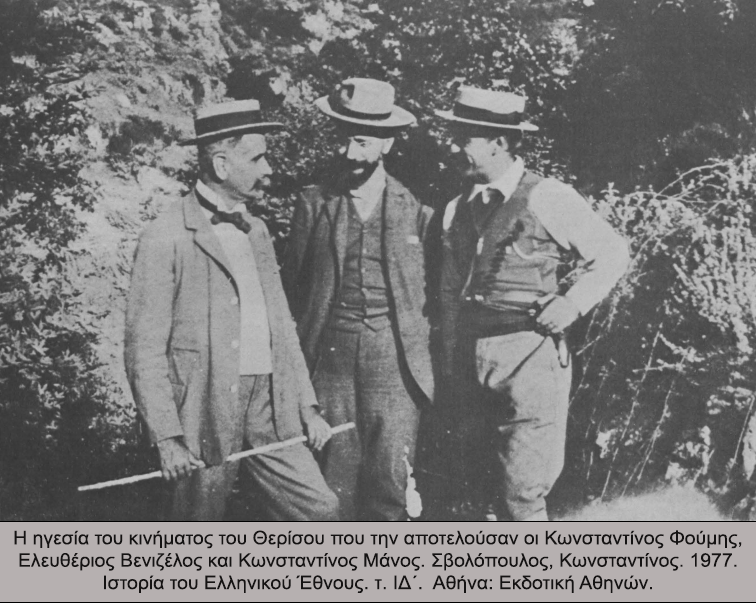
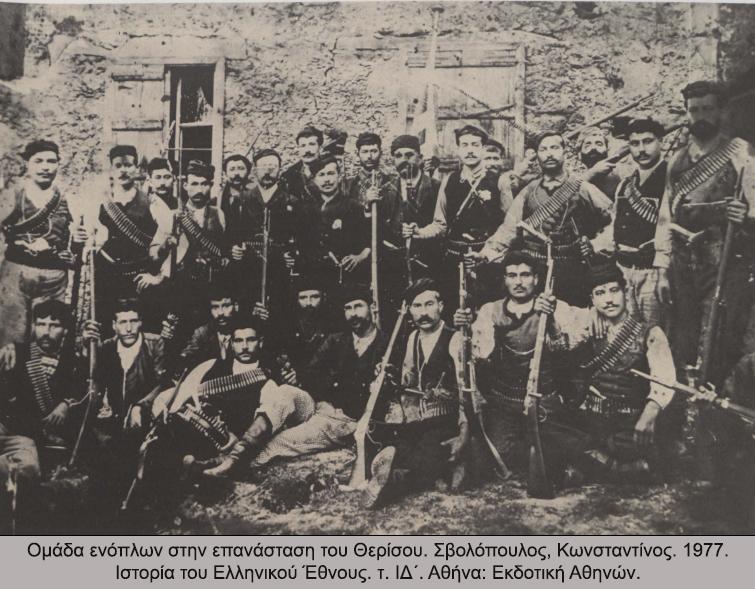
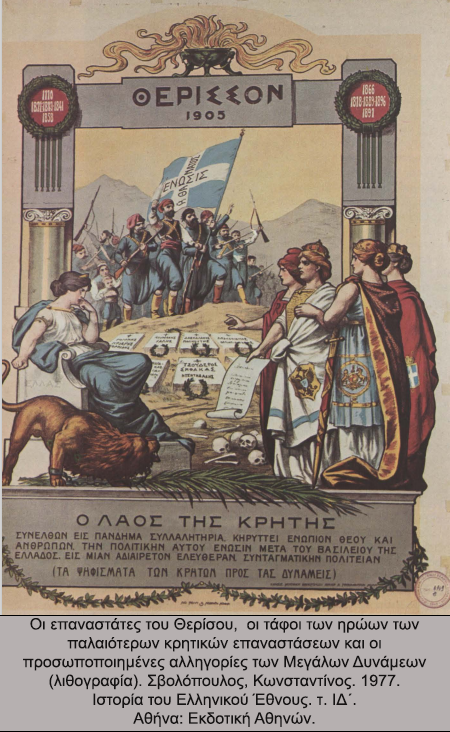
On 10 March 1905, Venizelos had a falling out with the high commissioner, starting an armed revolutionary movement in the village of Theriso, Hania. The main demands of this uprising were the promotion of the union of Crete with Greece, the immediate replacement of the high commissioner, and the radical change of the terms of internal government. The Prince’s response aimed at dismantling the revolutionaries, but without any significant success. Venizelos and his close associates, Konstantinos Manos and Konstantinos Foumis, rallied supporters who caused waves of support across the island, ignoring the Prince’s ultimatum that demanded their dissolution. The revolt resulted in a series of skirmishes, despite the intervention of the Great Powers to maintain peace in the region.
The substitution of the high commissioner by the collective body of the four consuls having key functional responsibilities improved the prospects for a more direct dialogue between the revolutionary leadership and the Powers. Following negotiations, the meeting between Venizelos and the consuls on 15 November at a nearby monastery sealed the deal and enabled the end of the movement. In the aftermath, upon decision of the Great Powers, King George was authorised to appoint the high commissioner of Crete, replacing Prince George with Alexandros Zaimis, an experienced and moderate political leader.
The Theriso Revolt is considered one of the most important in the history of Crete, essentially laying the foundation for the later union with Greece and establishing Eleftherios Venizelos’s fame as a leader.
#ΕλληνικόςΣτρατός, #HellenicArmy