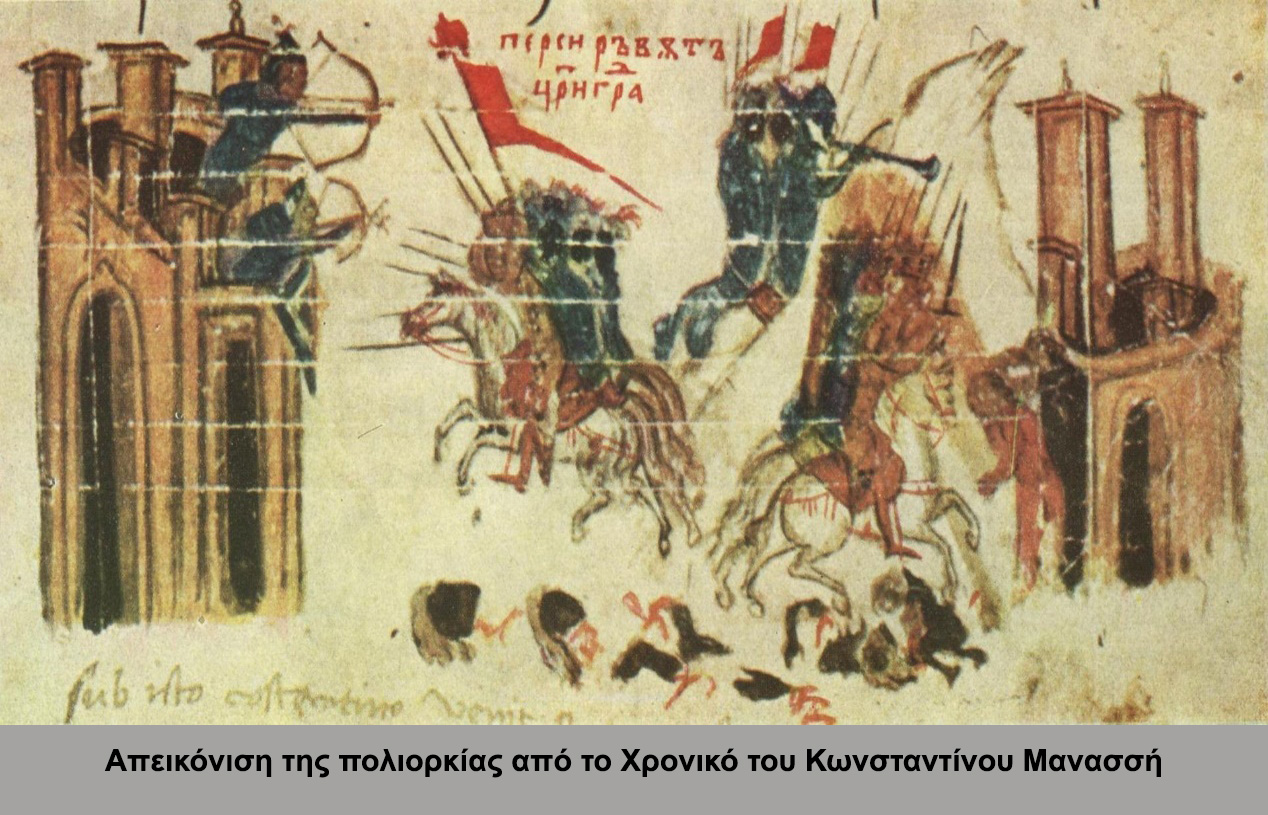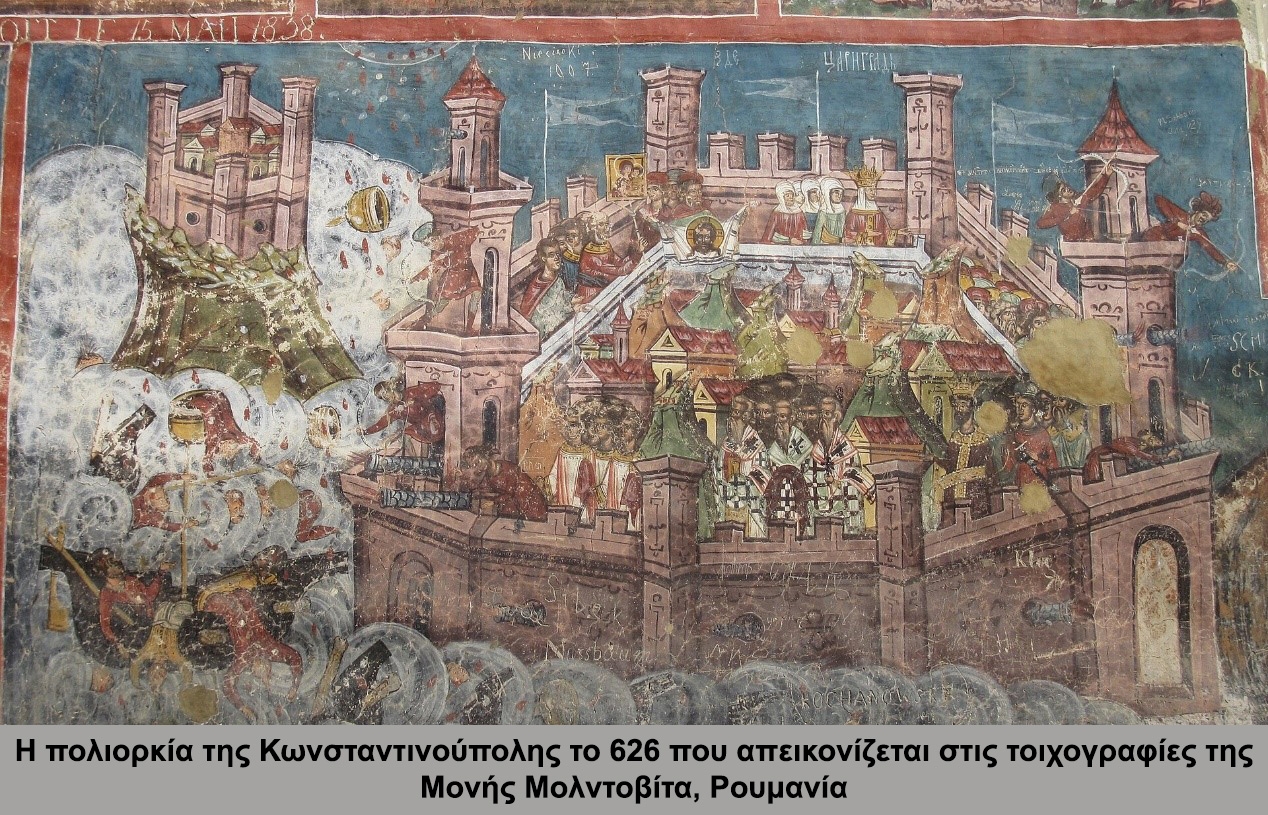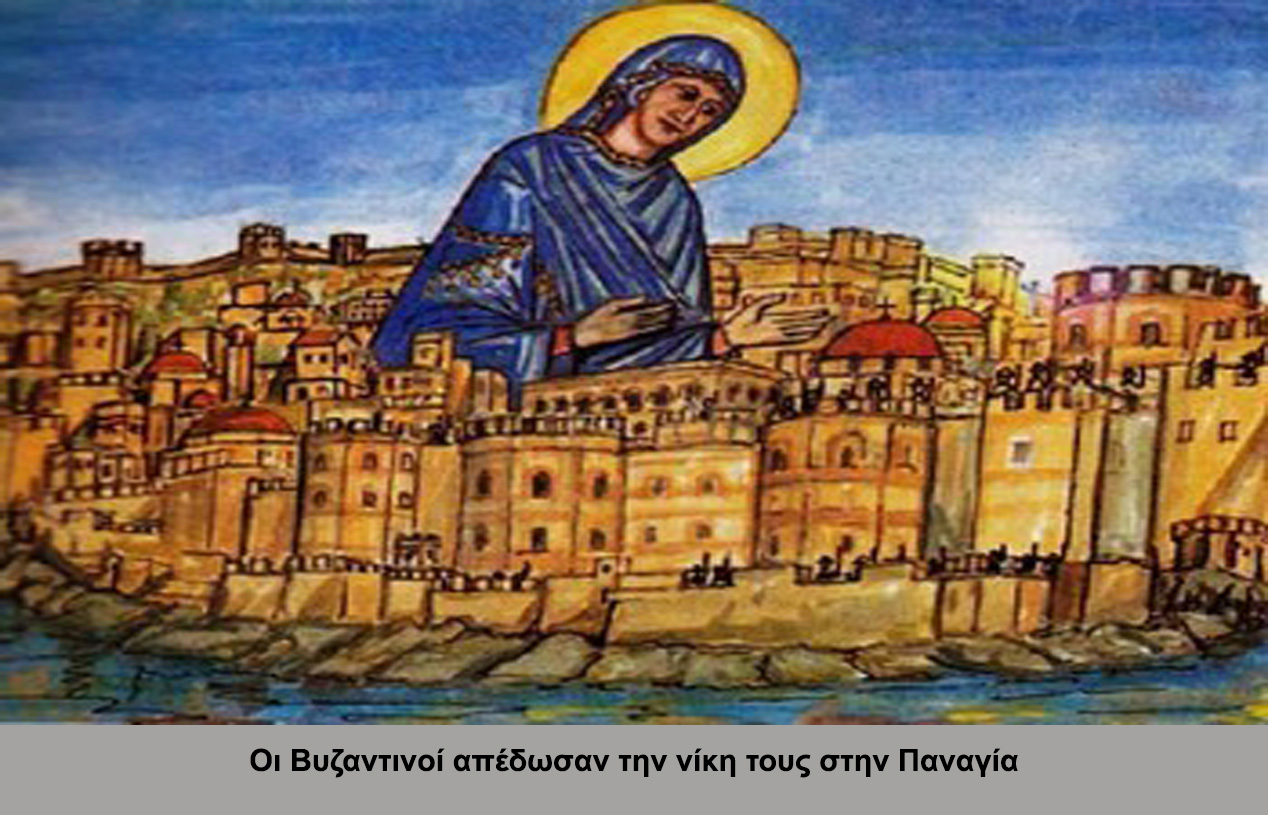
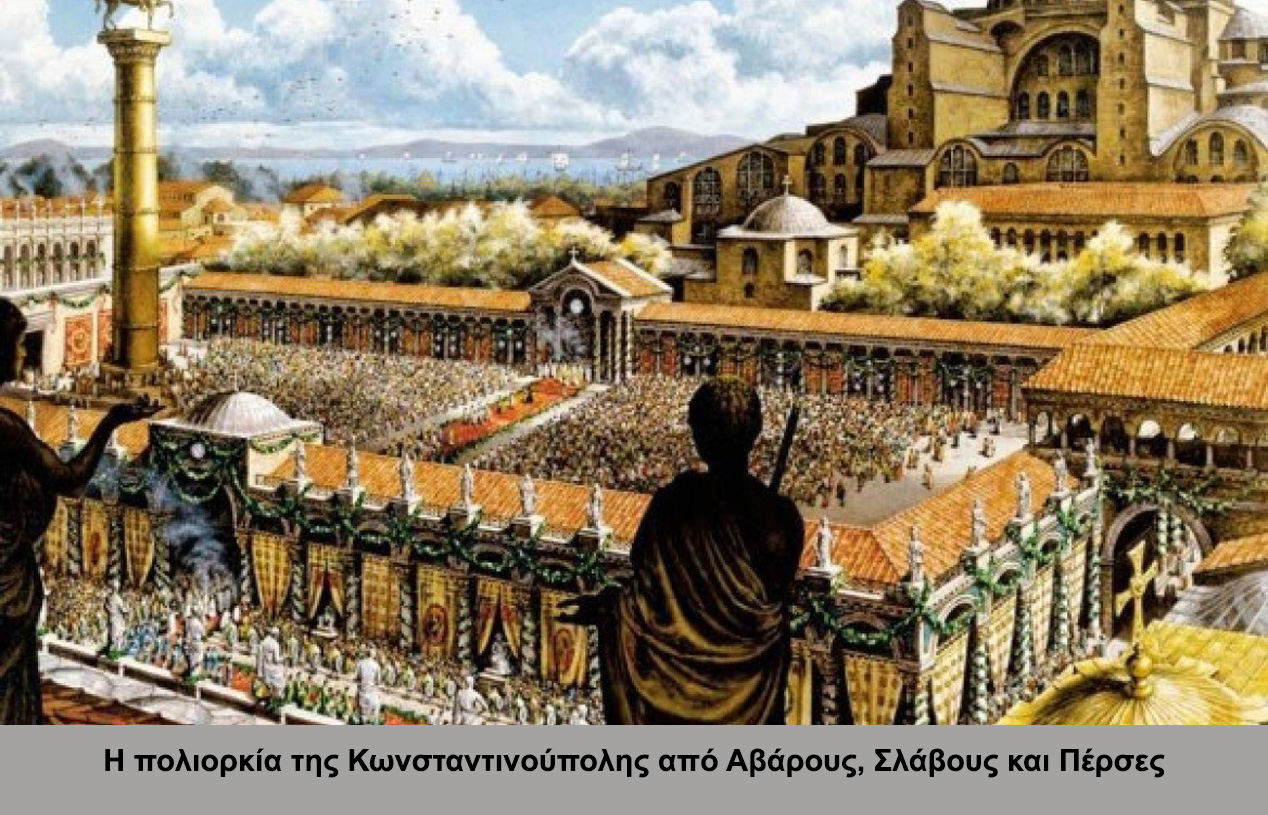
A milestone for the byzantine history is the combined attack of Avars and Persians against Constantinople in August 626, where the Byzantines prevailed and attributed their victory to Virgin Mary.
Historical framework
The overthrow of emperor Mauricious (582-602) by Phocas, one of the worst emperors of Byzantium, offered the Persians a unique opportunity to repeat their attacks at the eastern frontiers of Byzantium, presenting themselves as avengers and punishers of Phocas. From 606 to 610, they managed to restore the Persian supremacy in the lands that had been granted to the Byzantine Empire by Chosroes II with the Treaty of 591 and impose the Persian dominion on almost all of Mesopotamia.
In the first years of the reign of Heraclius (611-620), the Persian generals Shahin and Shahrbaraz, exploiting the chaotic situation of the empire, managed to conquer Syria, Palestine and Egypt. In the spring of 614, they conquered Jerusalem and what followed was tragic.
The chroniclers state that with the active collaboration of the Judeans, thousands of Christians were slaughtered, 300 churches were destroyed, along with monasteries and other religious institutes. The Persians, after removing all the treasures of the City, captured and transported to Persia 35,000 prisoners, among whom the Patriarch Zacharias, who died during his captivity. Along with the Patriarch, they took the Holy Cross, which they transferred to the Persian court upon Chosroes’ order. At the end of 615, the Persians invaded Asia Minor and reached Chalcedon.
While the Persians were advancing in the east, in the north and west of the empire, the few byzantine garrisons had to face other equally important adversaries, the Avars and the Slavs. However, the Persians remained the main danger. One of the priorities of the new emperor was the settlement of disputes between Byzantium and Persia through arms. For this reason, he proceeded in establishing a strong army. In fact, he characterised the campaign as holy war, since the symbol of Christianity was in the hands of the infidels. But first, he made an agreement with the Avars for big financial exchanges in order to have his rear covered.
The campaign of Heraclius against the Persians
The preparation of the army lasted for two years. Heraclius was in charge of his troops having as a main cause the smashing of the Persians and the regaining of the Holy Land and the holy relics that had been in their hands since 614. The war with the Persians lasted for six whole years (622-628) and was an arduous confrontation between the two superpowers of the time. In the spring of 625, Heraclius smashed three big Persian armies and then he moved towards Euphrates, having first conquered Martyropolis and Amida (Diyarbakir). In the river Saros in Cilicia, north of Adana, the two armies collided once more. Despite the many casualties, the Byzantines obliged the Persians to move towards the south, conquering Sivas at the same time.
The siege of the City
The hard battles of Heraclius against the Persians did not leave Chosroes unresponsive. To face Heraclius, he made an agreement-unknown how-with the Khagan (leader) of the Avars for joint action against the Byzantines.
The Khagan proceeded with the recruitment of thousands of warriors from the Slavic, Tatar-Mongolic and Huns tribes, he constructed numerous siege engines, he gathered a large number of pack-animals and ordered the Slavs to build dug-out canoes in order to have a well-trained fleet.
First, he moved against Thessaloniki, which he sieged in vain for 33 days. The meeting with the Persians in an arranged time made him stop the siege and move towards Constantinople.
On 29 June 626, the frontline of the Avars, consisting of 30,000 men, reached the walls of the City. A lot of villages and churches were on fire, whereas the City was overrun by thousands of refugees. The Khagan sent a force of 1,000 men to Sykes in order to contact the Persians.
On 30 July, the Avars set up siege engines and the next day they launched the attack. The force that they lined up was approximately 150,000 men, in contrast to the defenders of the City who were just 12,000. The situation was critical for the besieged people, since Heraclius was out of Constantinople fighting the Persians in Asia Minor. He had left in his place his minor son Constantine, who was supervised by the patriarch Sergios and the magistrate Vonos.
From the first moment of the siege, the Byzantines, aware of the greedy character of the Khagan, tried to tempt him with money and gold. He would not be bribed and he persistently asked for the surrender of the City, since he believed that, in various ways, the Byzantines were stirring up the tendencies of independence that the Slavs demonstrated against the Avars.
The Khagan, in a move of distraction, launched in the Golden Horn dug-out canoes constructed by slaves, causing unrest to the Byzantines. On 3 August, he launched the rest of the dug-out canoes in Bosphorus, in order to be used as landing boats for the transport of the Persian forces.
On 6 August, the Avars attacked a weak spot of the walls of the City, seized the church of Panagia Vlaherna and used it as a fortified position. The next day, the spy network of the Byzantines was informed of the signal of the attack of the Slavic boats, which was the lighting of fire from the “Pteron” position. Vonos gave the order to light fires that caused the mistimed attack of the Slavic boats, which were decimated by the ready for war Byzantines. A similar fate awaited the dug-out canoes that transported Persian soldiers from Chalcedon, which were sunk by the byzantine navy. The casualties of the Persians amounted to 4,000.
The besieged, when informed that Theodore, the brother of the emperor, was approaching with an army, were encouraged. They came out of the walls and started the counter-attack. The Khagan lifted the siege and left with his army. Since then, the Avars did not trouble the Byzantines again and disappeared from the horizon of the empire. The man in charge of the Persian army, Shahrbaraz, “returned in shame” to his country, as the chroniclers of the time recount.
The triumphant victory of the Byzantines was attributed to Virgin Mary. The Patriarch, the young Constantine, with the officials and the people went to the church of Panagia Vlaherna and they chanted, while standing, the Akathist Hymn attributing the “victory” and their gratitude to the invincible champion.
#ΕλληνικόςΣτρατός, #HellenicArmy