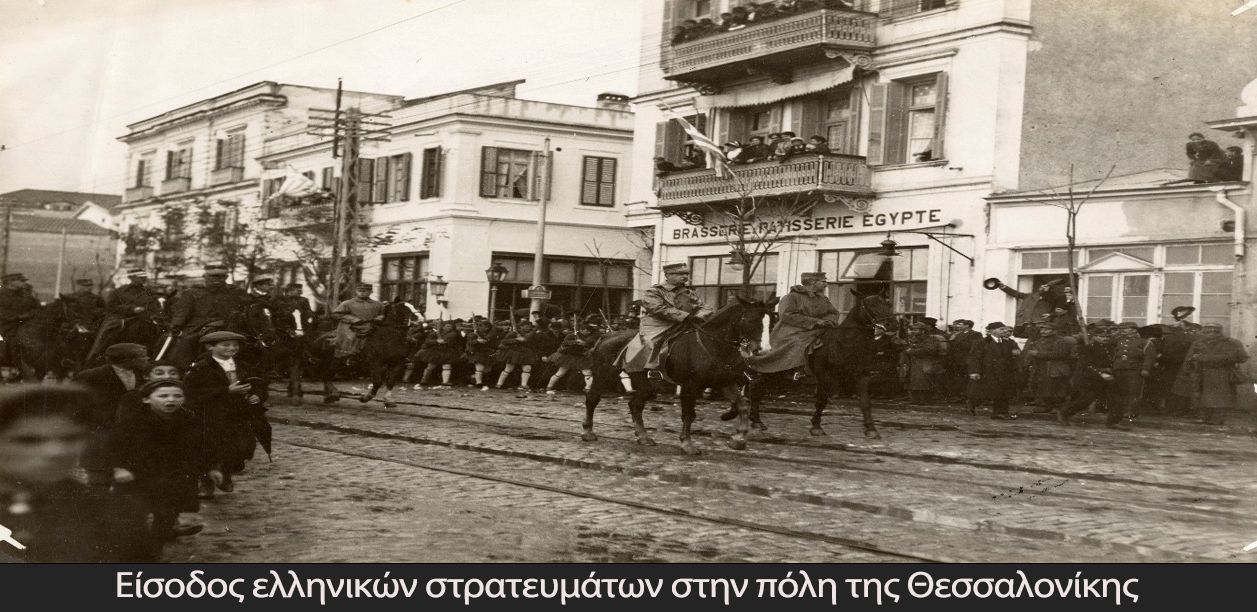
The liberation of Thessaloniki on 26 October 1912 during the First Balkan War was a landmark for modern Greek history. The city was under Ottoman rule and constituted a significant strategic hub for the Balkans. For Greece, the occupation of Thessaloniki was a matter of vital importance, as it constituted the key for the occupation of the rest of Macedonia.
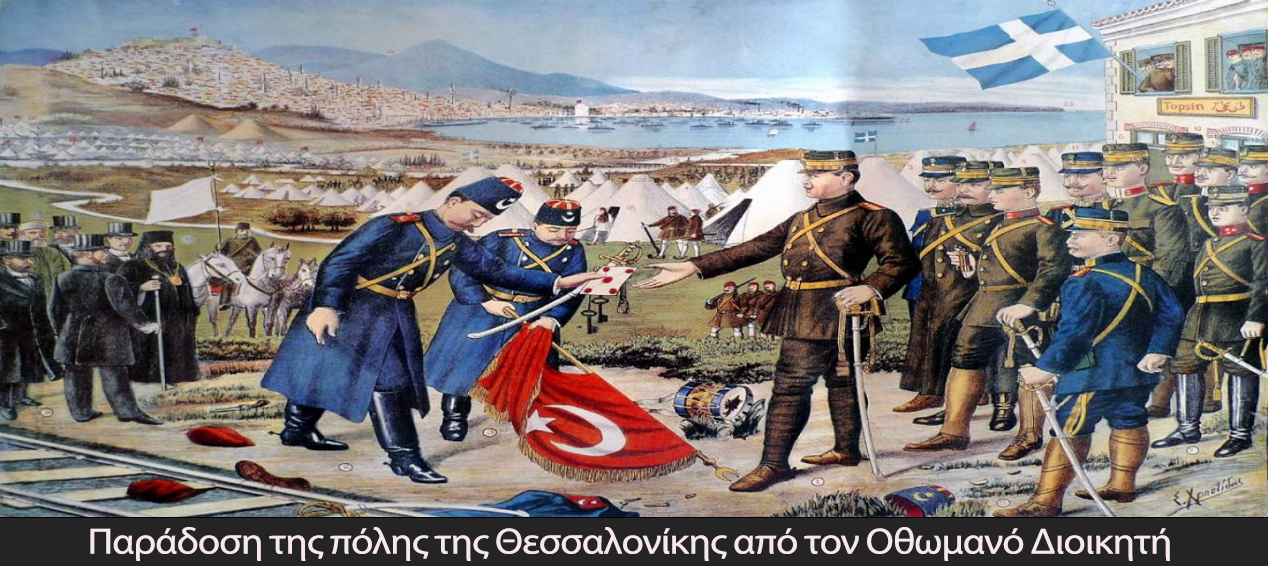
The Hellenic Army, under the leadership of the Heir to the Hellenic Throne, Konstantinos, marched rapidly to Thessaloniki, after its victories in Sarandaporo and Giannitsa. On 25 October, the Hellenic Troops were on the outskirts of the city, while Bulgarian forces were nearing from the north. The Ottoman commander of Thessaloniki, Hasan Tahsin Pasha, acknowledging his inability to defend the city, agreed to its unconditional surrender, by signing a surrender treaty with the Hellenic Army. The surrender treaty was signed in the morning of 26 October.
The liberation of Thessaloniki constituted a turning point for the Greek strategy in Macedonia, while it reinforced the Greek claims in the Balkans.